
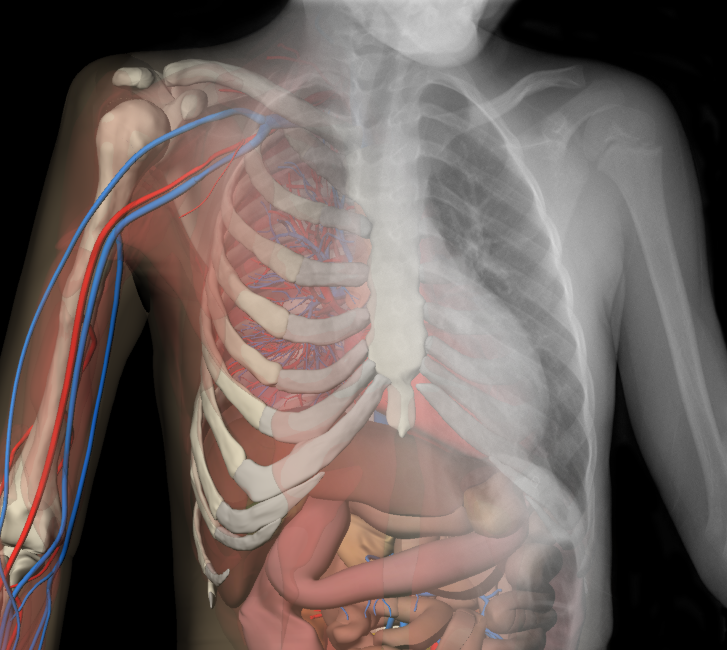
The Center for Virtual Imaging Trials (CVIT) at Duke University has received a five-year, $6.63 million grant renewal from the National Institutes of Health to expand its work using computer-simulated models and human digital twins to improve medical imaging technologies.
CVIT is a National Center for Biomedical Imaging and Bioengineering supported by the National Institute of Biomedical Imaging and Bioengineering and operated at Duke.

The renewal marks the second five-year phase of the center and will significantly expand its capabilities. Building on a platform developed during its first funding period, CVIT researchers will create more realistic models of human anatomy and physiology, and extend the center’s simulations to a wider range of imaging technologies, diseases, and artificial intelligence methods for image analysis and synthetic data generation.
Researchers will apply these tools to key clinical challenges, including cancer care, quantitative imaging, and rare diseases across diverse imaging technologies, including photon-counting CT, cone-beam CT, PET, and PET/CT, with an eye toward reducing radiation exposure. CVIT will also make its validated tools, data, and training resources available to scientists and practitioners across the country.
“Medicine today faces three fundamental priorities: how we can ensure an intervention presumed effective is actually effective, how evidence drawn from aggregate data can be confidently applied to an individual, and how can we confidently explain the outcome of a clinical trial deterministically. The virtual trial methodology uniquely gives us a pathway to tackle each of these priorities head-on,” said Ehsan Samei, PhD, FACR, director of CVIT.
“Our work directly translates into advancing medical imaging innovations towards patient-centered care and direct clinical impact.”
Traditional clinical trials used to evaluate medical imaging technologies can be expensive, time-consuming, and difficult to conduct. CVIT addresses these challenges by recreating the imaging process in a virtual environment. Using realistic digital models of patients, imaging scanners, and image readers, researchers can evaluate new technologies in a controlled environment where the underlying anatomy and disease characteristics are known.
These virtual trials can help guide and complement clinical studies, speed the development and evaluation of new imaging technologies, improve understanding of how imaging systems perform, reduce unnecessary radiation exposure, and provide high-quality data for developing and testing artificial intelligence tools.